
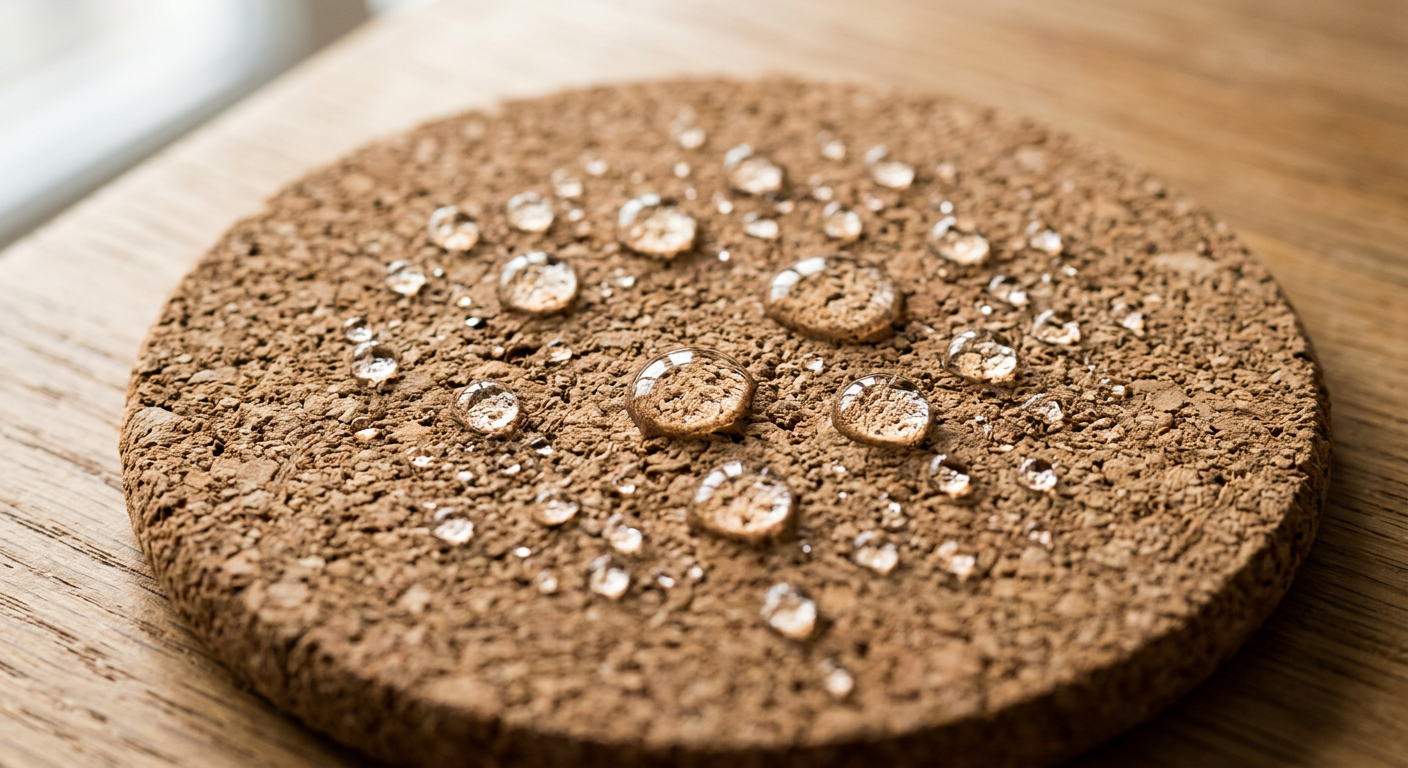
As you explore the option of using cork for your kitchen, bathroom, or living room flooring, one of the questions that will come up in your mind will be, “Is cork flooring waterproof?” Cork flooring is famous for its comfort, sustainability, and beauty. Since it is usually used in damp areas, many people ask about its performance when exposed to water.
The straightforward answer is that while it is very water-resistant, it is not waterproof because of its natural composition and a component called suberin. At the same time, sealing is important for protection of your floor.
In this guide, we will tell you everything about how cork performs when it comes into contact with water and where it can be used.
What Is Cork Made Of?
Cork is harvested from the bark of the cork oak tree (Quercus suber), primarily found in Mediterranean regions. Unlike timber harvesting, cork extraction does not require cutting down the tree. The bark regenerates naturally, making cork one of the world’s most renewable and sustainable materials.
The Cell Structure of Cork
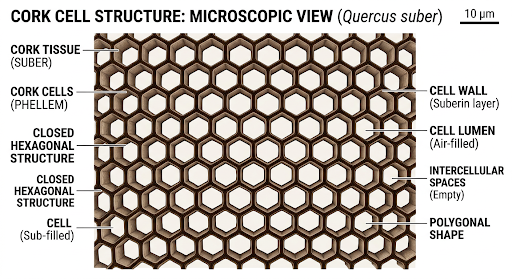
The remarkable properties of cork come from its microscopic structure.
Cork consists of millions of tiny air-filled cells arranged in a honeycomb-like pattern. These cells form a closed-cell structure, meaning each cell is sealed and largely isolated from surrounding cells.
- Excellent water resistance
- Thermal insulation
- Sound absorption
- Compressibility
- Lightweight performance
Because the cells are closed rather than open, water has difficulty penetrating deep into the material. This is one of the primary reasons cork is considered a naturally hydrophobic material.
Suberin — Cork’s Natural Waterproofing Compound
The secret behind cork’s ability to resist moisture lies in suberin.
Suberin is a waxy, natural substance that makes up a significant portion of cork’s composition. It acts as a protective barrier within the cork oak bark, helping the tree defend itself against moisture loss and environmental stress.
Suberin gives cork some qualities:
- Water repellency
- Resistance to moisture absorption
- Durability
- Flexibility
- Protection against microbial attack
Because of this naturally occurring compound, cork is often described as a natural water-repellent material, requiring far less treatment than many alternative materials.
Is Cork Flooring Waterproof or Water-Resistant? (Clearing the Confusion)
The terms “waterproof” and “water-resistant” are often used interchangeably, but they are not the same.
For most practical applications, cork’s flooring waterproof performance is excellent, but technically, cork should be classified as water-resistant rather than completely waterproof.
| Property | Water-Resistant | Waterproof |
| Resists spills | Yes | Yes |
| Handles humidity well: | Yes | Yes |
| Absorbs zero moisture, even with prolonged contact | No | Yes |
| Can remain submerged indefinitely without impact | No | Yes |
| Suitable for prolonged underwater exposure | Limited | Yes |
Therefore, when someone asks if cork flooring is water resistant, the answer is a clear yes.
When asking if corks flooring are waterproof or if cork flooring is waterproof, the more accurate answer is that cork naturally repels water extremely well, but is not designed for permanent immersion.
This distinction is important for architects, retailers, hospitality buyers, and product designers selecting materials for commercial environments.
Does Cork Flooring Absorb Water?
One of the most common questions buyers ask is: Does cork flooring absorb water?
The answer depends on the duration and conditions of exposure.
Short Exposure vs Prolonged Submersion
Under normal use conditions, cork absorbs very little water.
For example:
- Kitchen spills regularly encounter condensation.
- Bathroom humidity may experience occasional spills.
- Cork flooring handles routine cleaning.
- Mopping and cleaning are frequently exposed to moisture.
In these situations, cork’s closed-cell structure prevents significant water penetration.
So if you’re wondering:
- Will cork flooring absorb water?
- Do corks flooring absorb water?
- Can cork products get wet?
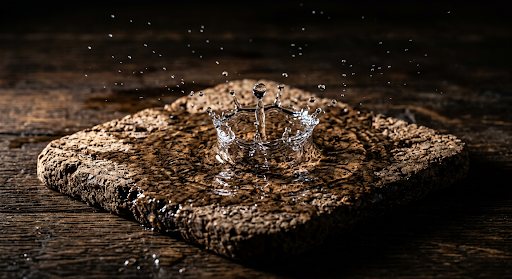
The answer is yes, cork can get wet and still perform exceptionally well when exposure is temporary.
Modern cork flooring is manufactured with protective finishes that help resist everyday moisture. While occasional spills won’t usually damage a sealed cork floor, standing water left for long periods can seep through joints and cause swelling or damage.
Where Can You Install Cork Flooring?
cork is really good to use in places where it might get wet sometimes.
Here are some examples of where you can use cork
Ideal Areas
- Living rooms
- Bedrooms
- Home offices
- Dining rooms
- Hallways
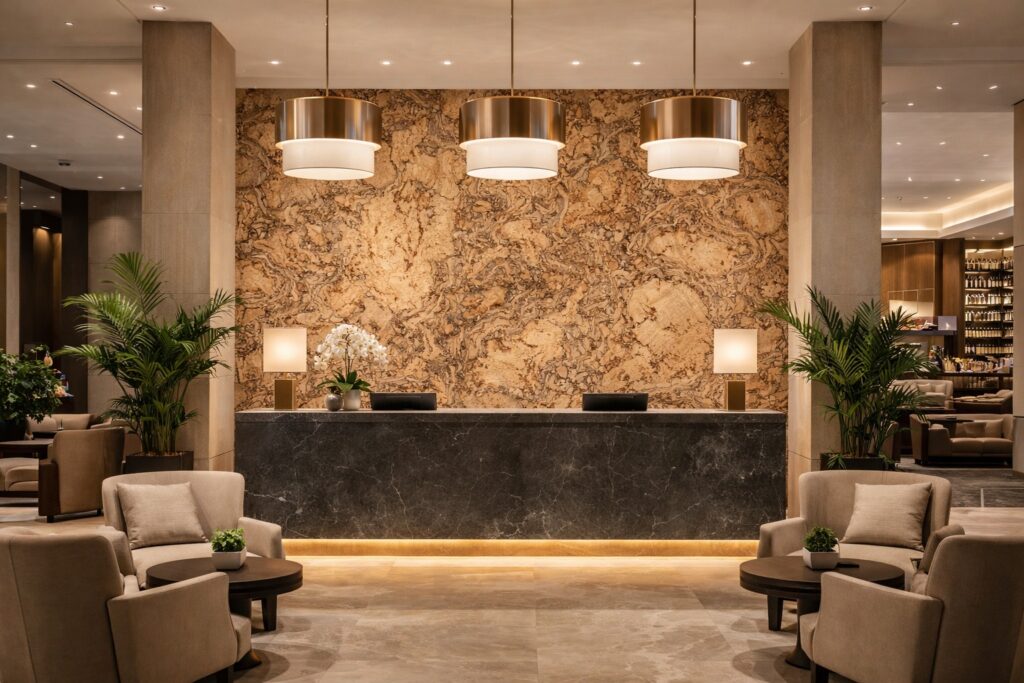
Suitable With Proper Sealing
- Kitchens
- Bathrooms
- Laundry rooms
- Basements with controlled humidity
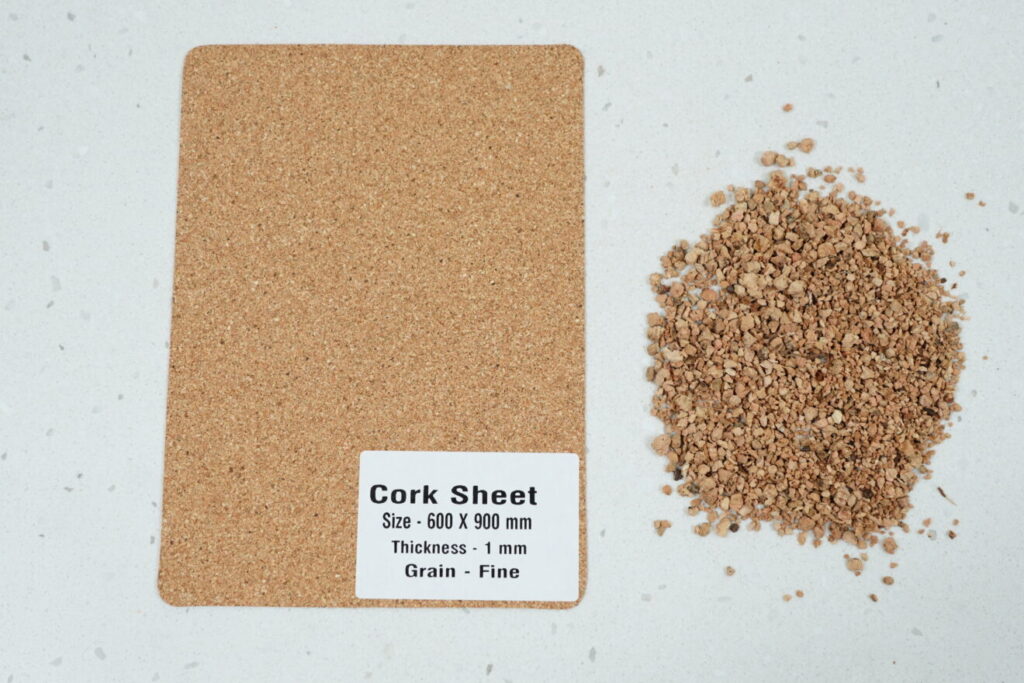
Avoid
- Swimming pool areas
- Outdoor flooring
- Continuously wet environments
Is Cork Heat-Resistant Too?
Water resistance is only one of cork’s advantages.
Cork is also naturally resistant to heat because the air trapped inside its cellular structure acts as an insulating barrier.
Benefits include:
- Reduced heat transfer
- Comfortable surface temperatures
- Protection for tabletops
- Improved thermal efficiency
This is one reason cork is widely used in coasters, trivets, flooring, and hospitality products.
For a deeper look at thermal performance, read our guide on /is-cork-heat-resistant/.
Why Choose Cork Flooring?
Talk about benefits instead of products:
- Comfortable underfoot
- Naturally insulating
- Sound absorbing
- Eco-friendly
- Water-resistant when sealed
- Long-lasting with proper maintenance
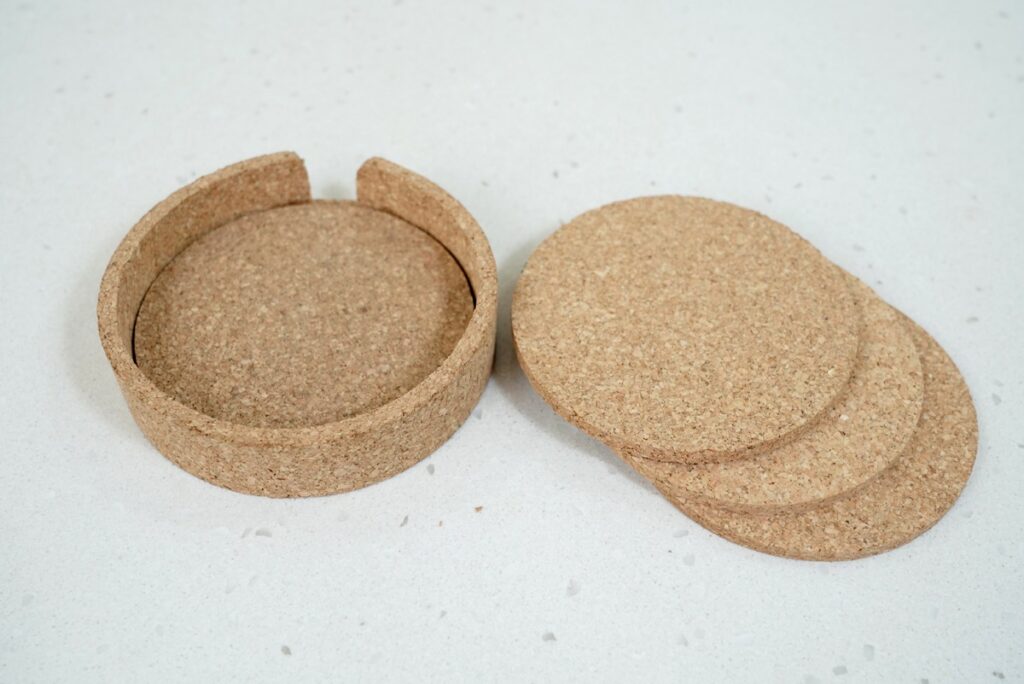
Cork Coasters
Designed to withstand condensation and beverage spills while protecting furniture surfaces.
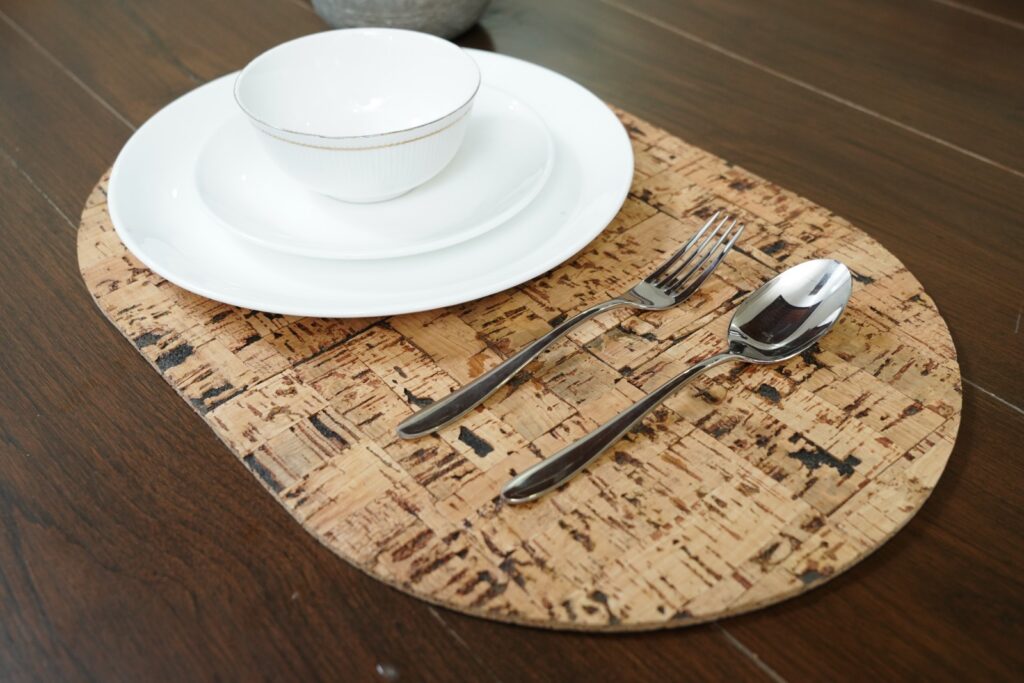
Cork Serving Trays & Décor
Cork serving trays and decor that’re durable and look good
HORECA Solutions
Our specialized /cork-horeca-range/ supports hotels, restaurants, cafés, and catering businesses seeking sustainable alternatives to conventional materials.

Because cork is naturally water-resistant, lightweight, and easy to maintain, it remains one of the most practical, eco-friendly materials for commercial environments.
FAQs
Is cork flooring totally waterproof?
No cork flooring is not 100% waterproof. It is very good at keeping out water. If it stays in water for a long time it will soak up some water. This is because of its natural stuff called suberin and its tight cell structure.
Can cork flooring get wet?
Cork flooring can get wet for a time without getting damaged. It should not stay in water for too long.
Does cork rot when it gets wet?
Usually no. Cork is better at keeping out water than other natural materials. If it stays wet for a long time without drying it might get moldy and start to break down.
Is cork flooring suitable for bathrooms?
Yes, cork flooring can work well in bathrooms if it is sealed properly. You have to install and take care of it correctly to make sure it keeps out water well.
What happens if water sits on cork flooring?
Additional protection can be achieved using sealants, polyurethane coatings, wax treatments, or specialized finishes designed for surfaces.
Conclusion
So, is cork flooring waterproof?
Cork flooring is not completely waterproof, but it is naturally water-resistant thanks to its closed-cell structure and suberin content. When properly sealed, it performs well in kitchens, bathrooms, and other areas exposed to everyday moisture.
However, like most natural flooring materials, it should not be exposed to standing water or flooding for extended periods. With proper installation and regular maintenance, cork flooring offers a durable, comfortable, and sustainable flooring solution for both residential and commercial spaces.