
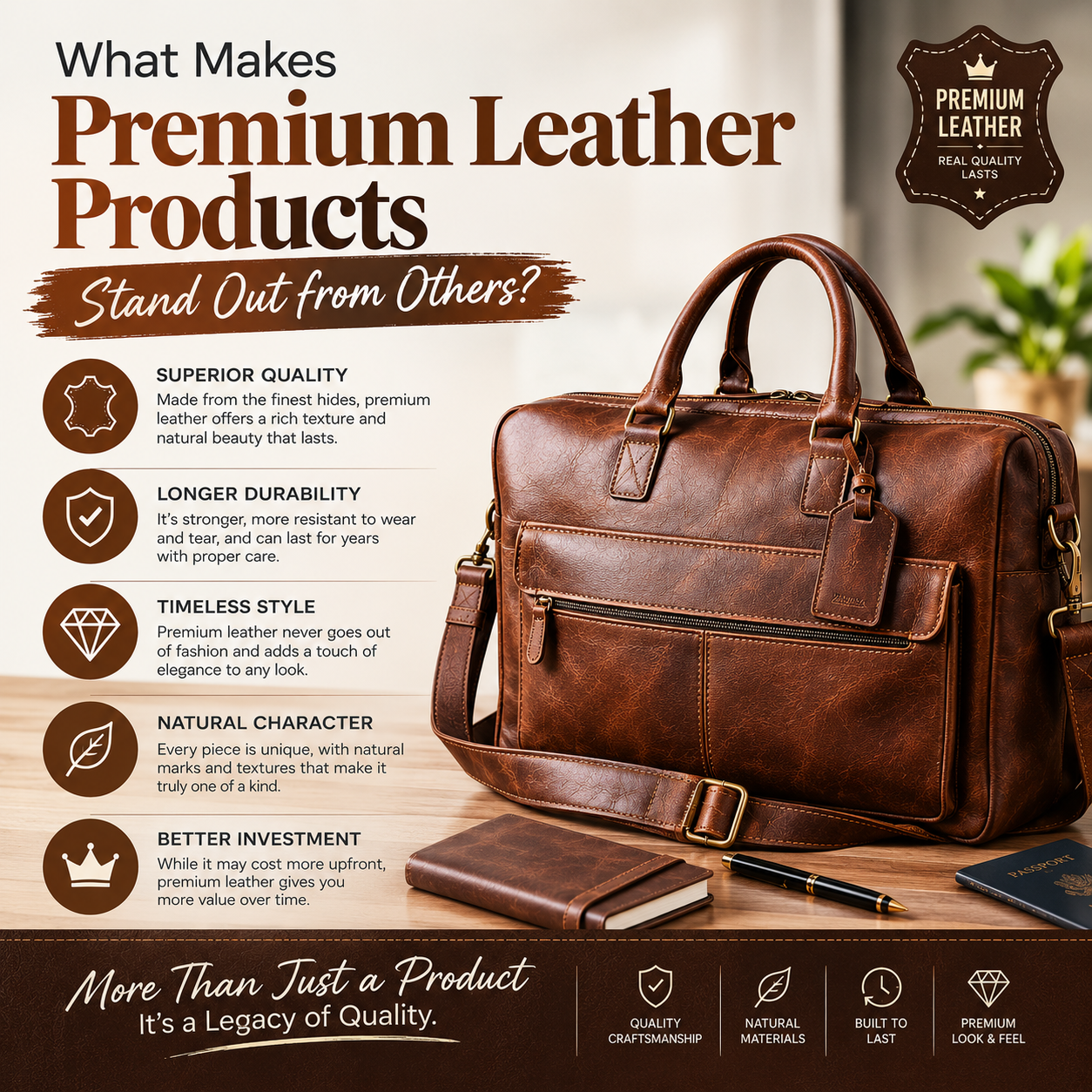
Walking into a leather goods store, you’ll notice something immediately. Not everything costs the same, and the price differences aren’t random. Premium leather products occupy a different category entirely. They’re not just more expensive versions of basic leather goods. They’re fundamentally different in how they’re made, what materials go into them, and what they deliver over time. Understanding these differences transforms how you shop for leather and helps you distinguish genuine premium quality from clever marketing.
Problem: All Leather Looks Similar at First Glance
The first thing that separates premium leather is the material itself. Not all leather comes from the same sources or undergoes the same processing. Premium leather typically starts with hides from specific cattle breeds known for superior quality. The hide’s age matters. The animal’s diet matters. Even the region where the animal lived influences the leather’s characteristics. Premium tanneries are selective about their raw materials in ways that budget leather producers simply aren’t.
Then there’s the tanning process itself. Premium leather uses methods that take longer and cost more but deliver dramatically superior results. Vegetable tanning, which uses tree bark tannins instead of chemicals, produces leather that ages beautifully and actually improves over decades. This process takes months instead of hours, which is why premium leather commands higher prices. Budget alternatives use faster chrome tanning, which is perfectly functional but doesn’t develop that incomparable character. Plant-based materials avoid this chemical step entirely, which is one reason cork has become a serious point of comparison for makers thinking about long-term sustainability.
The finish applied to premium leather matters enormously too. Quality makers apply finishes selectively, in ways that protect the leather while preserving its natural appearance and aging potential. Some premium leathers receive minimal finish, allowing the hide’s grain to show prominently. Others receive carefully formulated protective coatings that enhance rather than obscure the leather’s natural beauty.
Problem: How Can You Tell Quality Just by Looking?
Premium leather typically displays visible grain variation. Each hide is unique, with natural markings and color variations that distinguish it from mass-produced alternatives. Budget leather often looks too uniform, which is actually a red flag. The uniformity comes from heavy processing and synthetic finishes that erase the hide’s natural character. The same principle holds true for cork sheets, where no two pieces match and the natural pattern is the mark of authenticity rather than a flaw.
Run your hand across premium leather and you’ll notice texture. It feels alive, slightly irregular, genuinely tactile in ways that synthetic materials can’t replicate. This isn’t a defect. This is proof the leather retained its natural properties. Budget leather often feels smoother initially, but that smoothness comes from coatings that eventually crack and peel. Premium leather feels slightly textured because that’s authentic material responding honestly to your touch.
The weight also signals quality. Premium leather is typically substantial, which provides genuine durability and presence. It has gravity. It has substance. Budget leather often feels lighter because manufacturers thin it to save costs. This reduction in weight seems appealing initially, but it directly correlates with reduced longevity. You can literally hold premium leather and feel the difference — and interestingly, cork sheets deliver that same sense of presence at a fraction of the weight, which is part of why cork has found its way into premium goods that once relied on hide alone.
Problem: Construction Methods Seem Complex and Hard to Evaluate
Premium leather goods are typically handmade or feature significant hand labor in their construction. This isn’t nostalgic or inefficient. It’s genuinely superior. When skilled craftspeople construct each item, they can make decisions throughout the process that machines can’t. They can adjust for how an individual hide behaves. They can ensure seams are perfectly placed. They can verify that every stitch is precisely correct.
Machine-made items, even expensive ones, follow rigid patterns regardless of how individual materials behave. This works fine for standardized products, but it means compromises are baked into the design. Handmade construction eliminates these compromises. Alaskan-inspired leather goods USA exemplify this approach, bringing traditional craftsmanship methods to contemporary design. Each piece reflects decisions made by someone who understands leather deeply and cares about the outcome. The same hand-finished philosophy shows up in premium cork desktop accessories, where craftspeople apply the same care to a very different raw material.
Problem: Why Do Premium Pieces Cost So Much More?
Beyond materials and labor, premium leather goods feature superior hardware and construction details that remain invisible until you examine closely. Interior linings on premium briefcases use high-quality leather or canvas instead of cheap polyester. Stitching uses genuine thread counts that hold under stress, not thread that snaps at inconvenient moments. Zippers come from premium manufacturers known for smooth operation and durability, not cheap alternatives that jam constantly.
These details accumulate. A premium briefcase might have thirty percent more careful construction throughout. That thirty percent adds up to years of additional lifespan and a dramatic difference in daily experience. Using the item feels noticeably better. It functions more smoothly. Small frustrations never occur because the maker anticipated them and eliminated them.
Problem: How Do I Know Premium Goods Will Actually Perform Better?
Premium leather products are typically backed by genuine warranties or satisfaction guarantees because the makers are confident in their work. They’ll often repair or restore items at a reasonable cost because they’re committed to these pieces lasting. This confidence is worth something. It means the maker put thought and expertise into the design, not just profit margins.
The maker’s story matters too. Premium leather briefcases USA from established makers typically have clear histories. You can learn about their approach, their materials choices, their construction philosophy. This transparency suggests nothing to hide. Budget manufacturers often obscure their origins and processes precisely because the corners cut wouldn’t withstand scrutiny. Makers who are open about why they chose their material — hide or otherwise — tend to be the ones worth trusting.
Problem: Doesn’t Premium Just Mean Expensive Marketing?
Genuinely premium products earn their reputation through consistent delivery. If a maker has been producing quality leather goods for fifteen or twenty years, that reputation comes from items that actually lasted. Reputation can’t be faked long-term. The market eventually figures out which makers deliver genuine quality and which ones rely on marketing.
Problem: What If You Want Premium Quality Without Animal Hide?
Everything above describes what premium construction looks like: selective raw material sourcing, slow processing, visible natural grain, and hand-finished detail. None of that strictly requires cattle hide. The same standards apply to premium plant-based materials too, and cork fabric has become the closest genuine rival to leather on those exact terms.
Cork is harvested from the bark of the cork oak without felling the tree, and the bark regrows over roughly nine years, which makes it one of the more renewable premium materials available. Like a good hide, no two cork sheets are identical — the grain pattern varies naturally, which is the same visual signal of authenticity discussed earlier in this article. Cork is also naturally water resistant and resistant to mold, which addresses two of the failure modes that most often end a leather bag’s useful life.
At 9cork, the same premium-goods thinking gets applied to cork instead of hide: selective sourcing, minimal finishing, and construction meant to last rather than to hit a price point. The philosophy is identical to everything described above. Only the raw material changes.
Conclusion: A Complete Commitment to Excellence
Ultimately, what makes premium leather products stand out is a complete commitment to excellence across every decision. From sourcing hides to selecting hardware to training craftspeople to choosing finishes, premium makers make choices that prioritize longevity and beauty over cost reduction. The result is products that feel different when you hold them, perform better when you use them, and improve over time instead of degrading. Premium leather isn’t just nicer. It’s fundamentally different in how it’s approached, constructed, and how it serves you for decades. The same is true whether that raw material is a carefully tanned hide or a sheet of sustainably harvested cork — the standard of care is what defines premium, not the material itself.